Kitchen Backsplash Ideas & Trends for Kalamazoo Homes in 2026
Discover the top kitchen backsplash trends for 2026 — from handcrafted zellige tile to seamless quartz slabs — and find the perfect style for your Kalamazoo or Portage kitchen remodel.
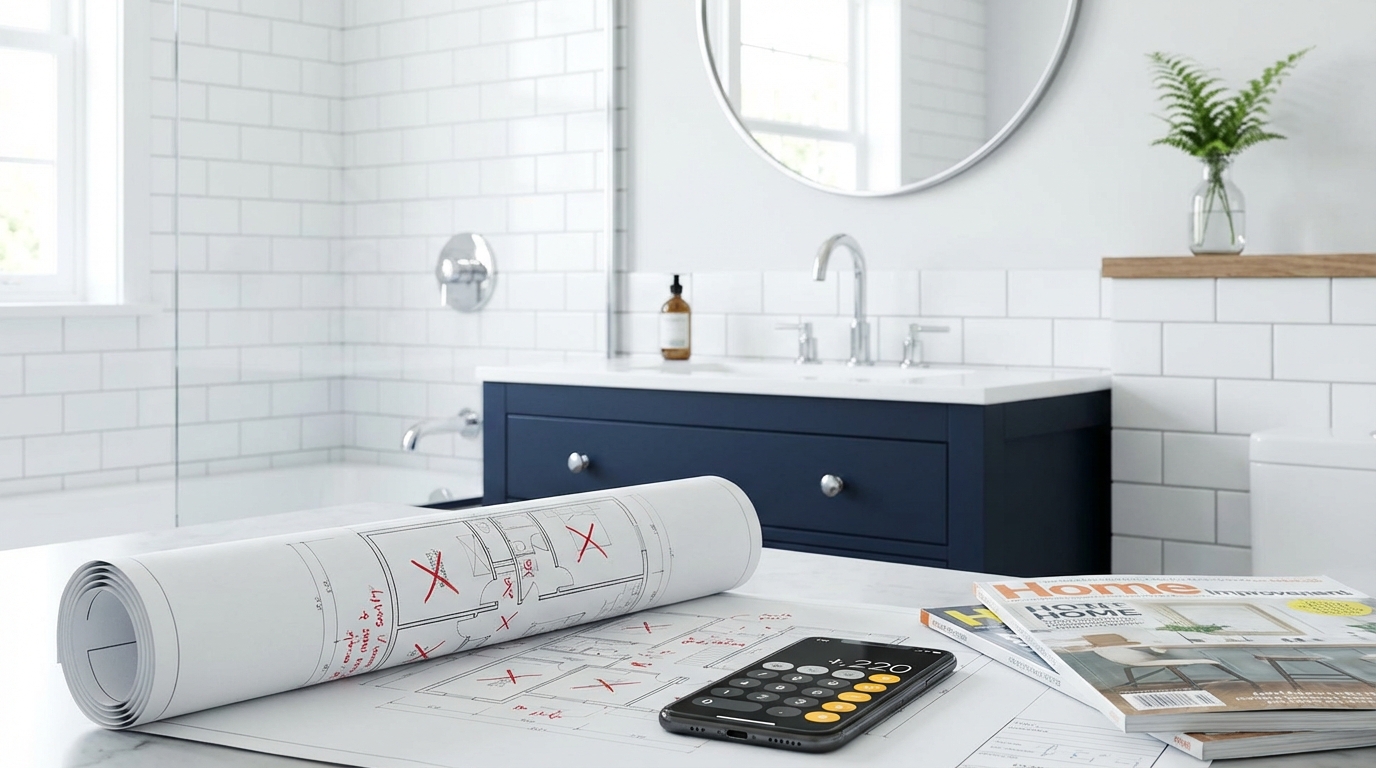
When homeowners plan a kitchen remodel, they usually focus first on cabinets, countertops, and appliances. But ask any designer at Scholten Kitchen & Bath, and they'll tell you the backsplash is often what makes a kitchen feel finished or forgettable. It's the detail guests notice first, the surface you'll look at every single day while you cook, wash dishes, and gather with family, and one of the easiest ways to tie your whole design together.
If you're weighing kitchen backsplash ideas for a remodel in Kalamazoo, Portage, or anywhere in West Michigan, here's an in-depth look at what's trending in 2026, what actually holds up in a working kitchen, and how to choose a style that will still look great a decade from now.
Why the Backsplash Deserves More Attention Than You'd Think
A backsplash isn't just decoration — it protects your walls from grease, water, and everyday splatter behind the sink and range. But because it sits right at eye level between your countertops and cabinets, it also carries more visual impact per square foot than almost any other surface in the kitchen. Get it right, and it elevates the whole room, pulling your cabinet color, countertop veining, hardware finish, and flooring into one cohesive story. Get it wrong or default to "whatever's cheapest and on the shelf" and it can make an otherwise beautiful kitchen feel unfinished or mismatched.
That's why backsplash selection is one of the most common conversations our designers have with Kalamazoo-area homeowners during the planning phase of a kitchen remodel, and why it deserves just as much thought as your cabinet style or countertop material.
2026's Top Kitchen Backsplash Trends
1. Zellige and Handmade Tile
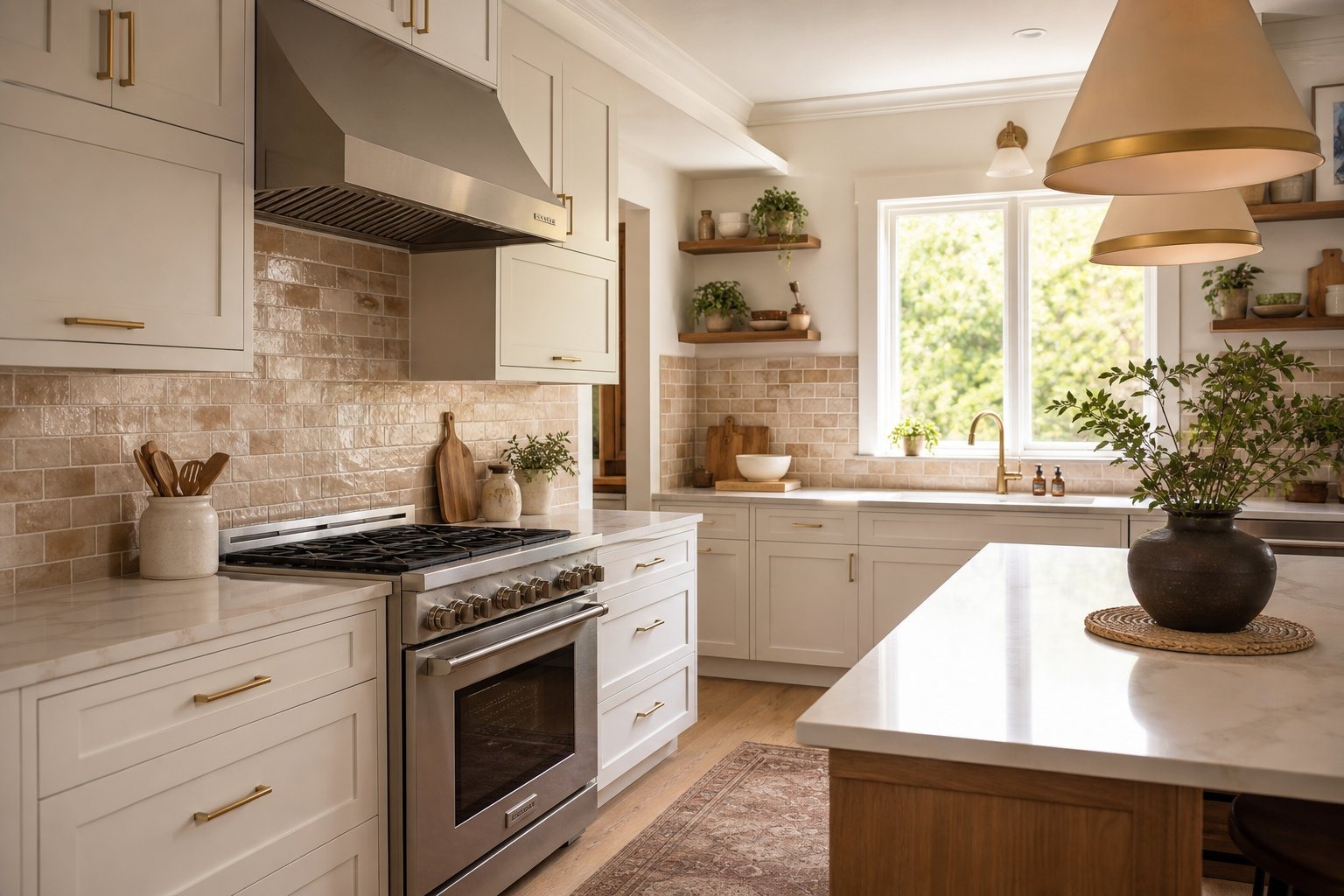
Zellige — traditional Moroccan clay tile with a slightly irregular, hand-glazed finish — continues to be one of the most requested looks for 2026. Its subtle variation in color, thickness, and texture gives a kitchen warmth and character that perfectly flat, machine-made tile simply can't replicate. Each tile catches light a little differently, so the wall seems to shift and glow throughout the day. It pairs beautifully with both classic white cabinetry and moodier, deeper cabinet colors like navy, forest green, or charcoal.
2. Large-Format Slab Backsplashes
For homeowners who want a sleek, seamless look, full-height quartz or marble slab backsplashes — sometimes running from the countertop all the way up to the upper cabinets or even to the ceiling — are one of the biggest trends we're seeing in 2026. Because there's no grout, there's also far less cleaning: no scrubbing grout lines after every meal, and no worrying about staining in the seams. Matching your backsplash to your quartz countertops creates a smooth, monolithic look that photographs beautifully, makes a small kitchen feel larger, and never goes out of style.
3. Vertical and Herringbone Layouts
You don't always need a new material to get a new look. Laying classic subway tile vertically, stacking it in a basketweave pattern, or arranging it in a herringbone layout instantly modernizes a familiar shape and adds visual height to a kitchen — a great trick for the more compact kitchen layouts common in older Kalamazoo and Portage neighborhoods. It's also one of the most budget-friendly ways to get a custom, designer look without paying for a premium material.
4. Warm, Earthy Tones
Kitchens are moving away from stark, cold white toward warmer neutrals — cream, terracotta, soft sage, toasted beige, and warm greige. These tones feel especially at home in Michigan kitchens during our long winters, adding warmth and coziness even when there's snow piled up outside the window. Warm-toned backsplashes also tend to hide everyday wear — water spots, light grease, and fingerprints — better than stark white ever could.
5. Textured and Dimensional Tile
Fluted, scalloped, and 3D wave tiles are showing up more often as accent backsplashes behind ranges or on kitchen islands, giving a custom, boutique feel without a full-room commitment. These tiles catch shadow and light in a way flat tile can't, adding a sculptural quality that works particularly well under pendant lighting or in a kitchen with a statement range hood.
6. Two-Tone and Mixed-Material Backsplashes
Rather than choosing one tile for the entire kitchen, more homeowners are mixing materials — a bold patterned tile behind the range as a "hero wall," paired with a simpler, quieter tile everywhere else. It's a way to get a striking focal point without the cost or visual overload of covering every wall in a statement material.
Subway Tile, Zellige, and Slab: How to Decide
Classic subway tile remains the most timeless and budget-friendly option, and it's endlessly flexible — white, colored, glossy, matte, laid straight or on point, with contrasting or matching grout. It's an easy choice if you want your kitchen to feel fresh for the next fifteen years without ever feeling dated.
Zellige and other handmade tiles cost more per square foot and take a bit more care during installation because of their irregular shape, but the payoff is a one-of-a-kind, artisanal look that mass-produced tile can't match. This is the choice for homeowners who want their kitchen to feel warm, layered, and personal.
Large-format slab backsplashes carry the highest material cost of the three, but they save on labor (fewer pieces to install, no grout to finish) and on long-term maintenance. If you cook often, hate cleaning grout, or simply want the calmest, most modern look possible, a slab backsplash that matches or complements your countertop is usually the best investment.
If you're unsure, our best advice is this: pick your countertop first, then let your backsplash either match it for a seamless look, or contrast it for a more layered, collected look. Trying to choose both at once often leads to decision fatigue — and a mismatched kitchen.
Choosing a Backsplash That Complements Your Cabinets and Countertops
The backsplash shouldn't be selected in isolation. A few rules of thumb our designers use with Kalamazoo and Portage clients:
Light cabinets, bold or heavily veined counters? Keep the backsplash simple and let the countertop be the star of the room.
Neutral counters? This is your chance to add color, pattern, or texture through the backsplash instead.
Small kitchen? Lighter tones and larger-format tile visually expand the space; busy patterns and heavy grout lines can make a small room feel more cramped.
Lots of natural light? You can afford richer, deeper tones and more saturated colors. North-facing or dimmer kitchens — common in older Michigan homes with smaller windows — often look best with a lighter, slightly reflective tile that bounces available light around the room instead of absorbing it.
Bold cabinet color? Let the backsplash play a supporting role in a neutral tone, so the cabinets stay the focal point rather than competing for attention.
Don't Forget the Grout
Grout color is one of the most overlooked design decisions in a kitchen remodel, but it changes the entire personality of a tile. Matching grout to your tile creates a soft, blended, almost seamless look — ideal if you want the backsplash to feel calm and unified. Contrasting grout (think white subway tile with charcoal grout) turns each individual tile into a graphic design element and adds a bolder, more modern edge. For busy households, a mid-tone grout is often the most forgiving choice, since it hides everyday staining better than pure white grout does.
A Note on Durability for Michigan Homes
Between humid summers and dry winter heat, Michigan homes put real stress on kitchen surfaces, and your backsplash is no exception. Porcelain and glazed ceramic tile resist moisture and temperature swings extremely well, making them a reliable choice year-round. Natural stone — like marble or travertine — needs periodic sealing to avoid staining and etching from acidic foods, something worth factoring into your decision if low-maintenance is a top priority. Quartz slab backsplashes split the difference nicely: they offer the elevated look of natural stone with far less required upkeep, which is part of why they've become so popular for busy Michigan households.
What Does a New Backsplash Typically Cost?
Backsplash pricing varies widely depending on material, pattern complexity, and how much wall space you're covering. As a general guide:
Ceramic and porcelain subway tile tends to be the most affordable option, especially in a straight-lay pattern.
Handmade tile like zellige costs more per square foot due to the material itself and the extra care required during installation.
Natural stone tile (marble, travertine) sits in the mid-to-upper range and typically requires sealing after installation.
Full-height slab backsplashes carry the highest material cost, but often even out in labor since there's a single large piece to install rather than dozens of individual tiles.
The best way to get an accurate number for your specific kitchen is a design consultation, where we can walk through material options against your budget and the scope of your remodel.
Ready to Choose Your Backsplash?
Whether you're drawn to warm handmade zellige, a seamless quartz slab, or a classic subway tile with a modern twist, the right backsplash should feel like it was designed for your kitchen — not picked off a shelf. Our design team at Scholten Kitchen & Bath works with Kalamazoo, Portage, and West Michigan homeowners to select cabinets, countertops, and backsplash materials that work together as one complete, cohesive design.
[Schedulea design consultation] with our team, or stop by our Kalamazoo showroom at 1728 South Westnedge to see backsplash and countertop samples in person.